
The Kingpin’s shadow
When staying strong means shutting everyone out.
He wants to protect his freedom and the people he cares about. In this imagined life, refusing to feel exposed gradually leaves him with fewer people beside him.
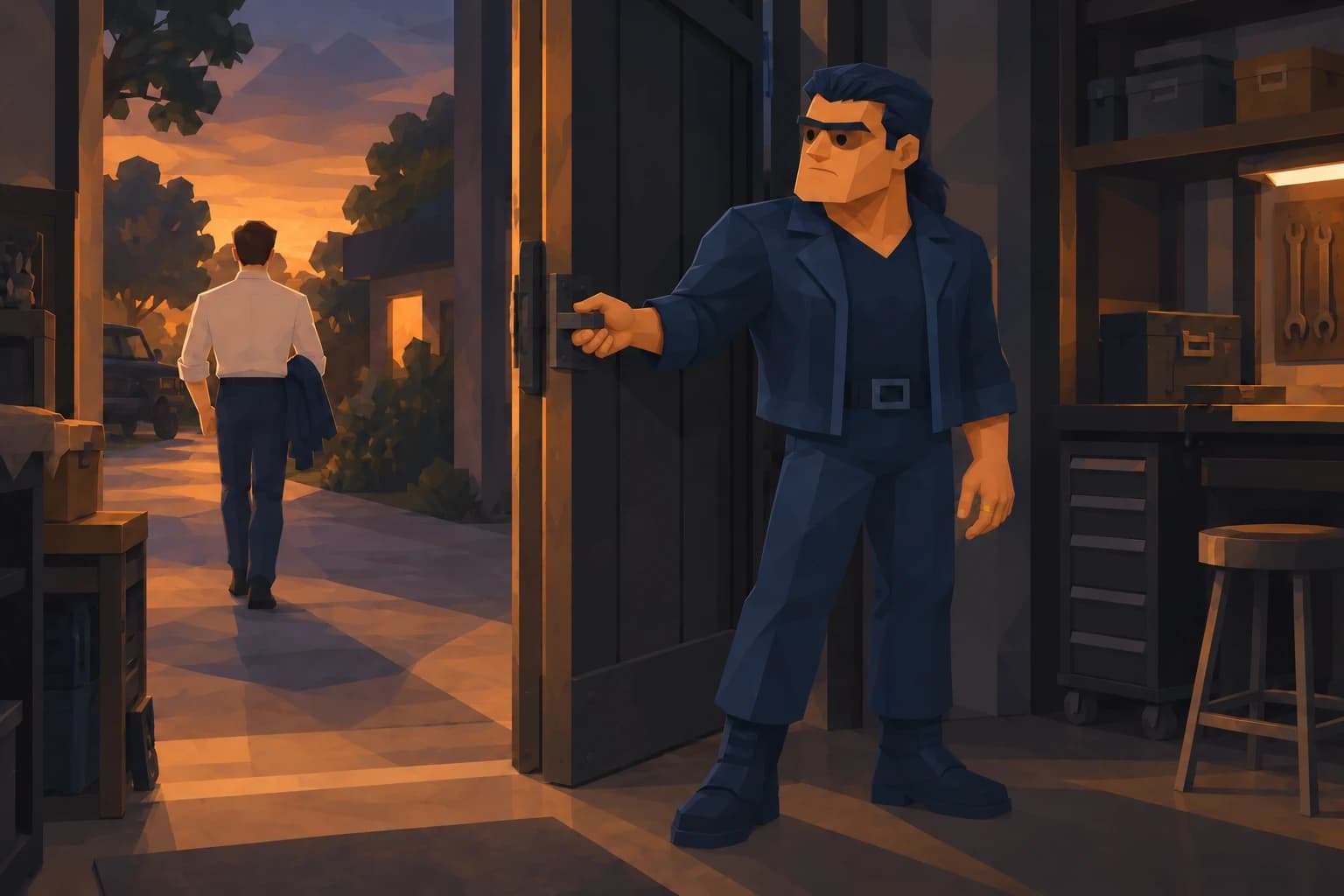
Protection can become a locked door.
Decisiveness can help him act when something needs doing. The difficult turn comes when disagreement feels like an attempt to control him, and needing support feels like surrender. He starts defending himself before anyone has finished speaking.
This is a fictional possibility, not a diagnosis or an inevitable Type 8 life. The male Kingpin here is one expression of the same pattern explored in the main guide.
He would rather rebuild it alone
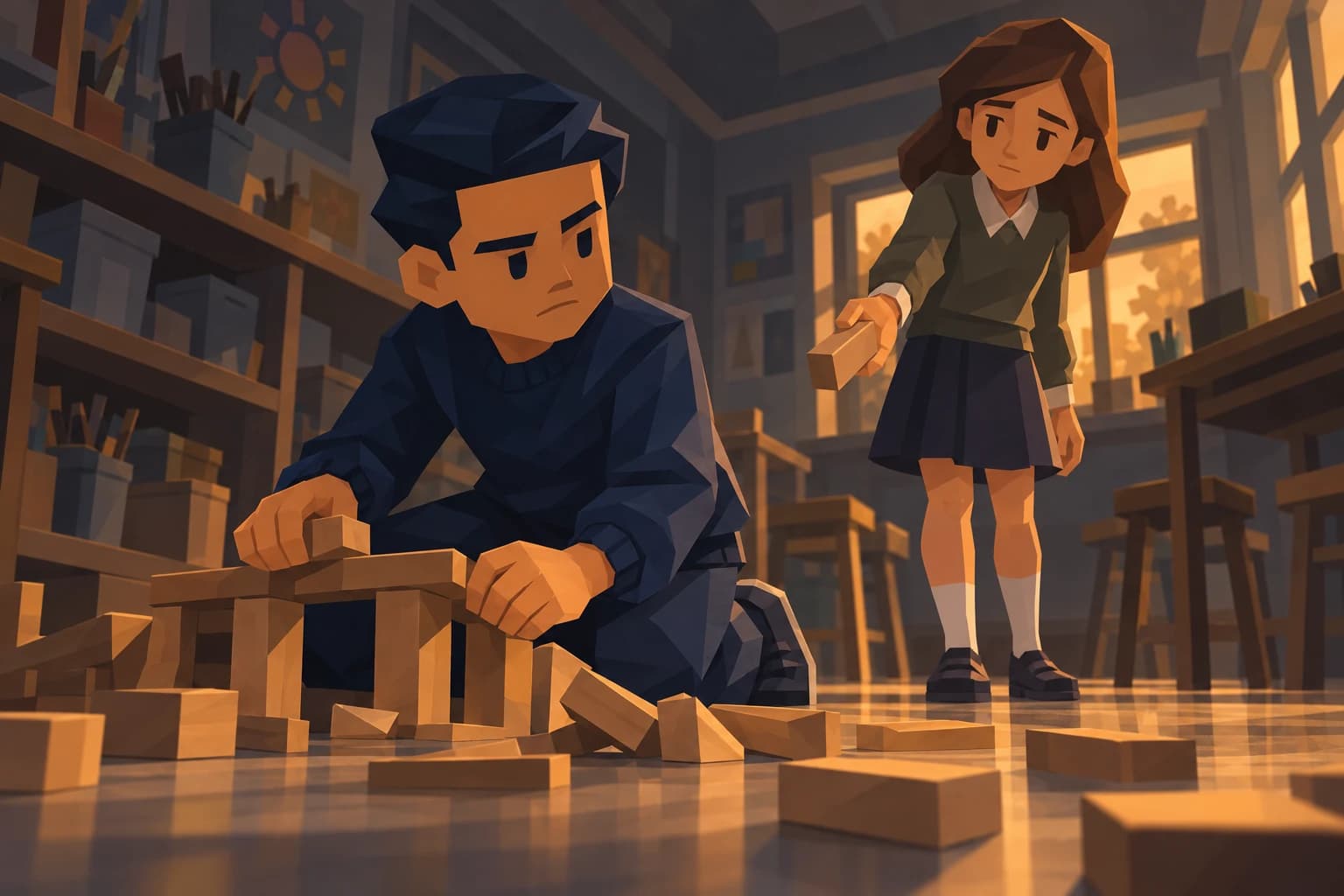
The wooden bridge falls just before the class is meant to see it. He gathers the pieces quickly, cheeks hot, and turns away when another child offers a hand. Rebuilding feels easier than letting someone notice how disappointed he is. His classmate waits with a block, then puts it down and leaves. He finishes enough of the bridge to stand it upright, but the excitement of sharing it has gone. Later, he remembers the interruption as somebody getting in his way, although help was what she had actually offered.
He has protected himself from being seen struggling, at the cost of a moment of company.
Walking away with the ball

By his teens, he is the friend who speaks up quickly and rarely seems unsure. At the basketball court, an argument over the next game becomes a test of who gets the final word. When somebody challenges his plan, he picks up the ball and walks away. He tells himself they can apologize if they want him back. Behind him, his friends are less interested in winning the argument than in why a small disagreement ended the afternoon. His anger keeps him moving until he is far enough away to notice that he misses them.
Leaving first can feel powerful while still leaving him alone.
Nobody can help if nobody gets a turn
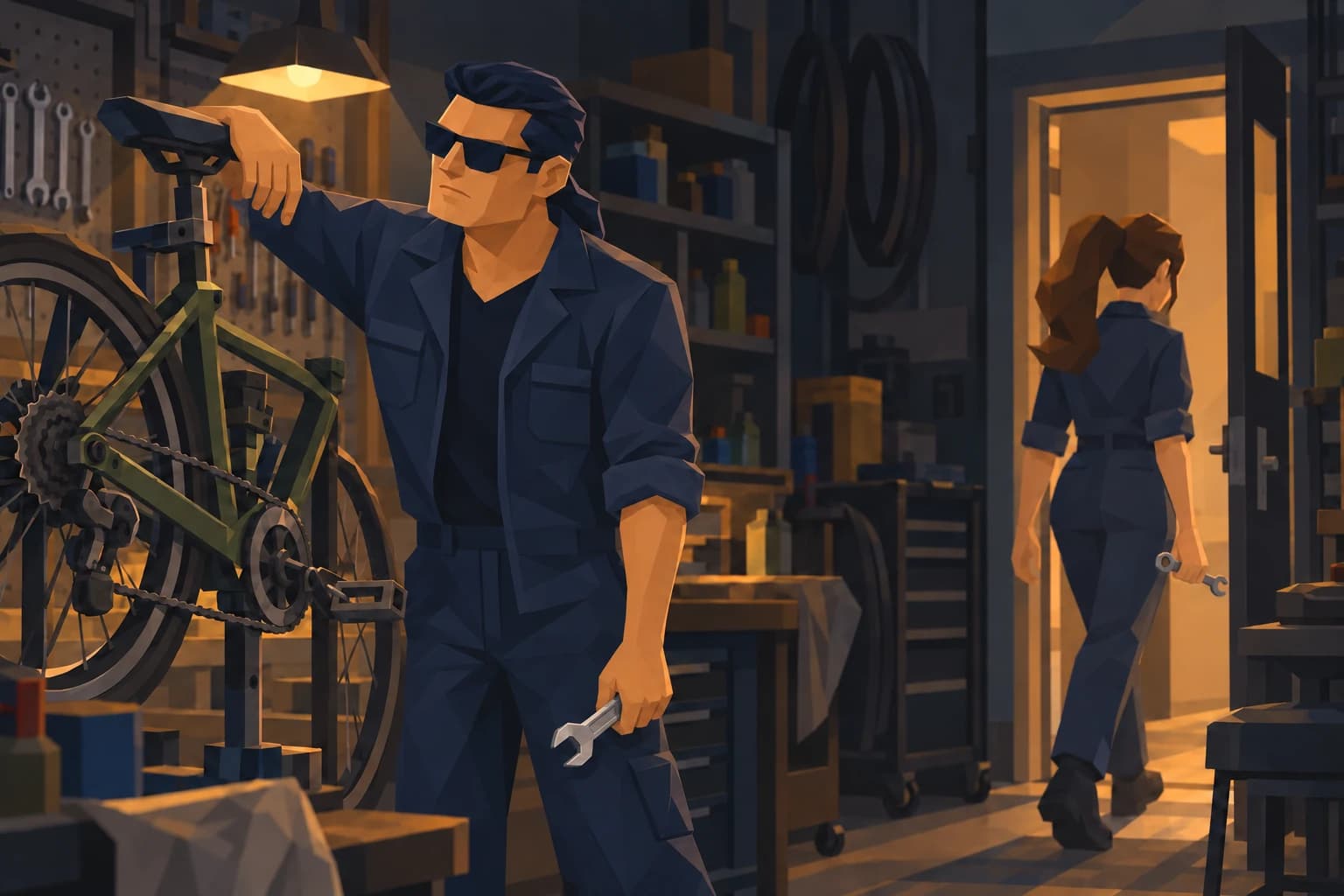
As an adult, he runs a repair workshop and takes pride in keeping promises to customers. When a difficult job runs late, a coworker proposes a different approach. He cuts her off and takes the tool himself. Her suggestion sounds, to him, like doubt about his ability. She leaves him to it, and he spends the evening doing work they could have shared. The next day, she offers fewer ideas. He reads that silence as proof that he must do everything, missing the connection between taking over and the withdrawal that follows.
The workshop becomes dependent on him because he has made participation harder for everyone else.
The help he keeps refusing

At home, his brother reaches for one end of a bulky box. He says he has it and keeps going, even though the awkward weight would be easier together. The exchange is small, but familiar. Offers become arguments about whether he can manage; concern sounds like a judgment that he is no longer capable. His brother steps aside rather than start another disagreement. Once the box is down, he wants the conversation to resume naturally. He does not quite see that accepting the help would also have accepted the closeness behind it.
Being able to manage is not the same as having to manage alone.
Leaving the gate open

Years later, a younger relative pauses outside his garden gate. Their last visit ended with advice delivered more forcefully than she wanted. He could begin by explaining why he was right, and he feels the familiar urge to do exactly that. Instead, he opens the gate and asks how she has been. It is not a dramatic reconciliation. She is cautious, and he has to resist filling every silence. But listening gives him something that winning the old argument never did: a chance to understand what she had been trying to tell him.
He remains himself while choosing a response that lets another person stay.
How the loop keeps going
- A moment feels exposing.A challenge, an offer of help, or uncertainty puts him on guard.
- He answers with control.He interrupts, takes over, or leaves before his concern can be seen.
- Others step back.Their ideas and affection become harder to offer.
- Distance confirms his suspicion.He feels alone with the responsibility and holds it more tightly.
The quieter signs
It may look like answering before the question is finished, turning a request into a test of loyalty, or describing hurt only as anger. He can confuse people giving him space with people having nothing to offer. The signal is how often a conversation ends in compliance or departure instead of understanding.
What he means, and what they may hear
“I will not let you push me around.”
They may hear: “There is no safe way to disagree with you.”
“I can handle this.”
They may hear: “You do not want me beside you.”
“I am protecting you.”
They may hear: “My own judgment does not count.”
Strength can include a pause.
He can keep his boundaries while making it easier for others to approach him.
- Let the first answer finish. Ask a question and wait through the whole reply before deciding what it means.
- Name what is underneath. Try “I felt dismissed” instead of turning the feeling into an accusation about someone's motives.
- Accept a bounded offer. Let someone carry one end, check one detail, or listen for ten minutes. Help need not transfer control.
- Repair the impact. Acknowledge the interruption or raised voice specifically, without making the apology depend on the other person agreeing.
He does not have to become smaller to make room for someone else.
Continue with the Kingpin’s growth practices