
The Pragmatist’s shadow
When checking becomes a way to stand still
His care helps people prepare for trouble. Under strain, the search for certainty can make ordinary decisions feel impossible. This fictional Pragmatist learns to use his judgment without demanding a guarantee.
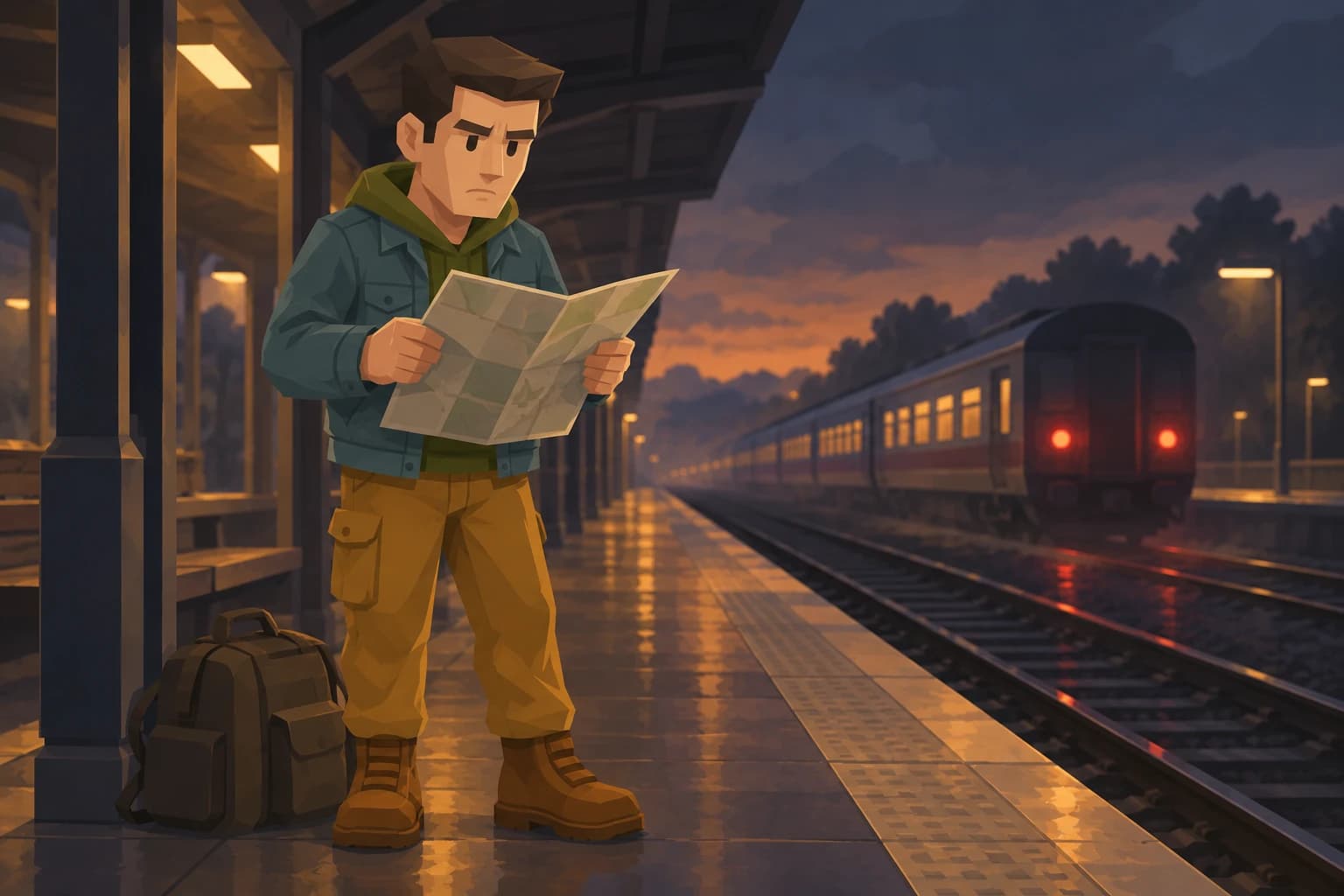
The train has already left
He checked the route before leaving home, then checked it again at the station. There might be a better connection. Perhaps he misunderstood the platform. By the time he looks up, the train is moving away. The map did not contain the reassurance he wanted: a promise that choosing would be safe from regret.
This is a fictional possibility, not a diagnosis or an inevitable Type 6 life. The male Pragmatist here is one expression of the same pattern explored in the main guide.
Waiting for the bridge to feel certain

At school, he notices the loose shoelace, the missing lunch bag, the part of a plan nobody has considered. Adults appreciate his care. On the playground bridge, though, noticing possibilities becomes imagining every way a step might fail. A classmate waits across the short span and says it is all right. He asks again. The answer helps for a moment, then the doubt returns. He is not trying to be difficult; he wants the uneasy feeling to end before moving. A patient adult helps him distinguish a real hazard from the ordinary wobble of trying something unfamiliar.
Courage can begin before the uneasy feeling has gone.
A conversation he has not actually heard

As a teenager, he cares deeply about his friends and remembers who showed up when things were difficult. Waiting at a bus shelter, he sees two of them laughing nearby and assumes they have made plans without him. Rather than ask, he sends a short, testing message and watches for a response. Their confusion feels like more evidence. When they finally speak, the conversation was about something unrelated. He feels foolish, then defensive. Repair means admitting that his guess had become an accusation. He begins practicing a harder sentence: he felt left out, but does not yet know what happened.
A feeling deserves attention; an interpretation still needs checking.
The delivery that cannot leave

In a delivery warehouse, his preparation prevents genuine mistakes. He knows which details matter and usually catches them early. During a busy week, he starts checking work his colleague has already confirmed. The parcels are ready, but the trolley stays beside the loading bay while he repeats the list. She feels mistrusted and stops offering suggestions. He notices the colder atmosphere and worries the team is becoming unreliable. Their conversation interrupts that loop. Together they agree on a clear handoff and the few exceptions that need another look. He must then tolerate the discomfort of letting the agreed process work.
Shared responsibility needs room for another person's competence.
Protection that holds everyone at the door
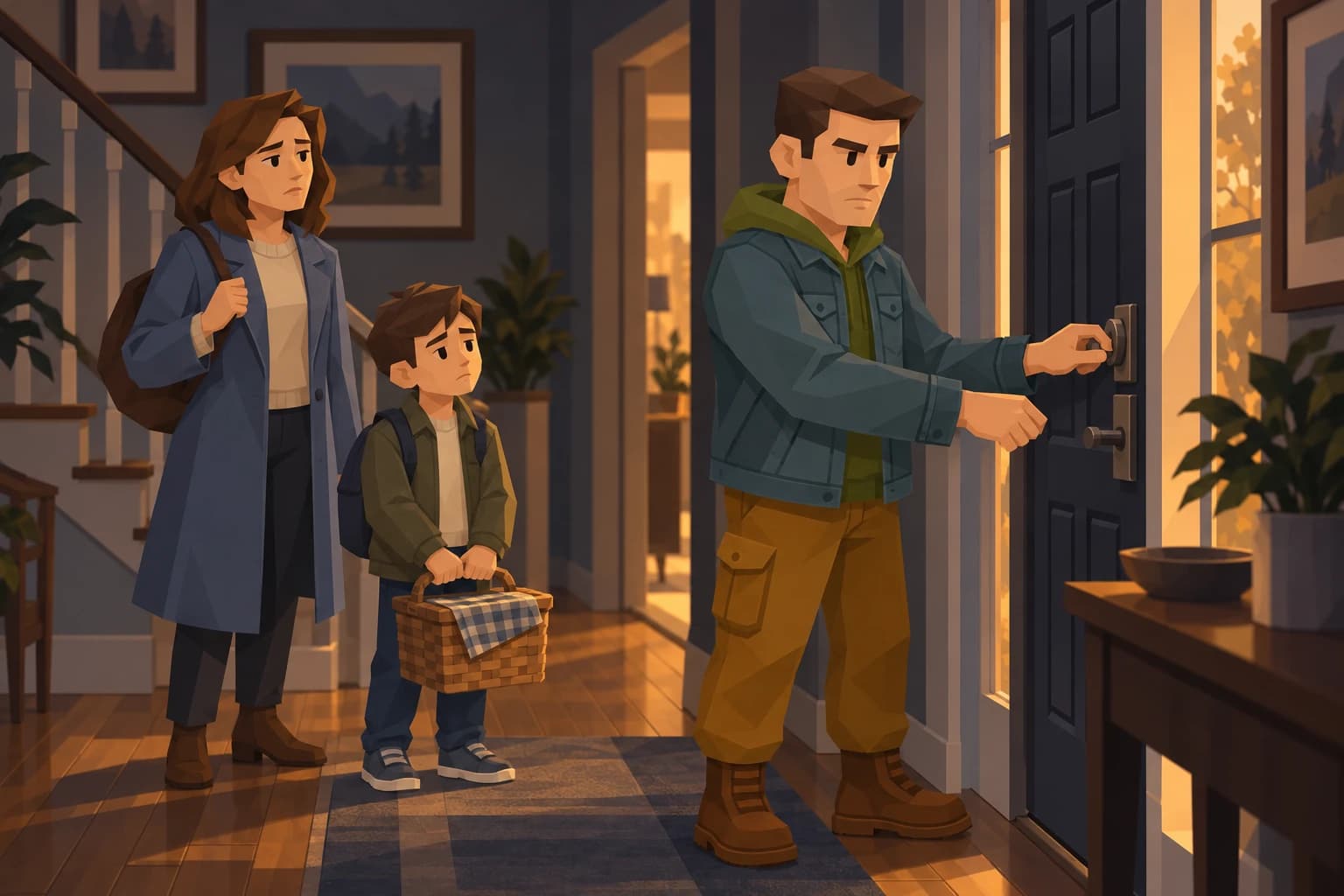
At home, he is often the person who remembers what everyone needs. Before a picnic, he packs carefully and checks the door hardware once more while his sister and nephew wait. The outing begins to feel like a series of tests they must pass. His sister finally says that she appreciates his care but feels managed by it. He wants to explain every risk. Instead, he notices his nephew quietly putting the basket down. They agree on the essential checks and leave. Nothing about the afternoon is guaranteed, but they can solve small problems together if they arise.
Looking after people includes trusting them to help carry an uncertain day.
A reasonable next step

Later, he walks a familiar riverside path with his grown nephew. At a footbridge, an old flicker of hesitation arrives. He looks at the conditions, makes a sensible assessment, and continues without asking for another opinion. The map stays in his pocket. He still prepares for trips and speaks up when something seems wrong. What changes is his relationship with the remaining uncertainty: it no longer gets an automatic veto. When his nephew asks for advice, he offers what he knows and leaves room for a different choice. Trust has become a practice rather than a feeling he waits to receive.
He can be careful and still let life move.
How the loop keeps going
- Notice what might go wrongHis attention finds gaps, ambiguities, and possible consequences.
- Seek a stronger guaranteeRepeated questions, tests, or checks briefly reduce the discomfort.
- Doubt returns, and trust wears thinOther people feel scrutinized; their frustration can seem to confirm his worry.
The quieter signs
In this story, he asks for advice after deciding, reads meaning into delays, and checks completed work without explaining why. Preparation remains a strength when it responds to evidence rather than every possible scenario.
What he means, and what they may hear
“I need to know we can depend on each other.”
They may hear: “You are being tested again.”
“I can see a risk we should consider.”
They may hear: “Nothing I do will be safe enough for you.”
“I am unsure of my judgment.”
They may hear: “Someone else must decide and carry the blame.”
Give judgment a chance to work
He builds confidence through clear agreements and decisions small enough to learn from.
- Separate observation from the story He names what happened, what he fears it means, and what information would genuinely clarify it.
- Agree on the useful check A shared stopping point keeps care from turning into an endless demand for reassurance.
- Choose, then review fairly He makes a reasonable decision with available information and judges it by that information, not by hindsight alone.
Trust does not remove uncertainty. It gives him another way to meet it.
Continue with the Pragmatist’s growth practices