
The Muse’s shadow
When longing keeps her outside the room
A fictional Muse wants to feel understood without editing away what makes her herself. This story explores one way that longing can turn into distance, and how connection can begin again.

She wants to enter as someone already understood.
She notices what others overlook: a change in someone's voice, an unexpected color, the emotional weight of a familiar place. Yet outside the studio she imagines everyone inside already belongs. She holds her work close and waits for a certainty that an open door cannot give her.
This is a fictional possibility, not a diagnosis or an inevitable Type 4 life. The female Muse here is one expression of the same pattern explored in the main guide.
The picture beside hers
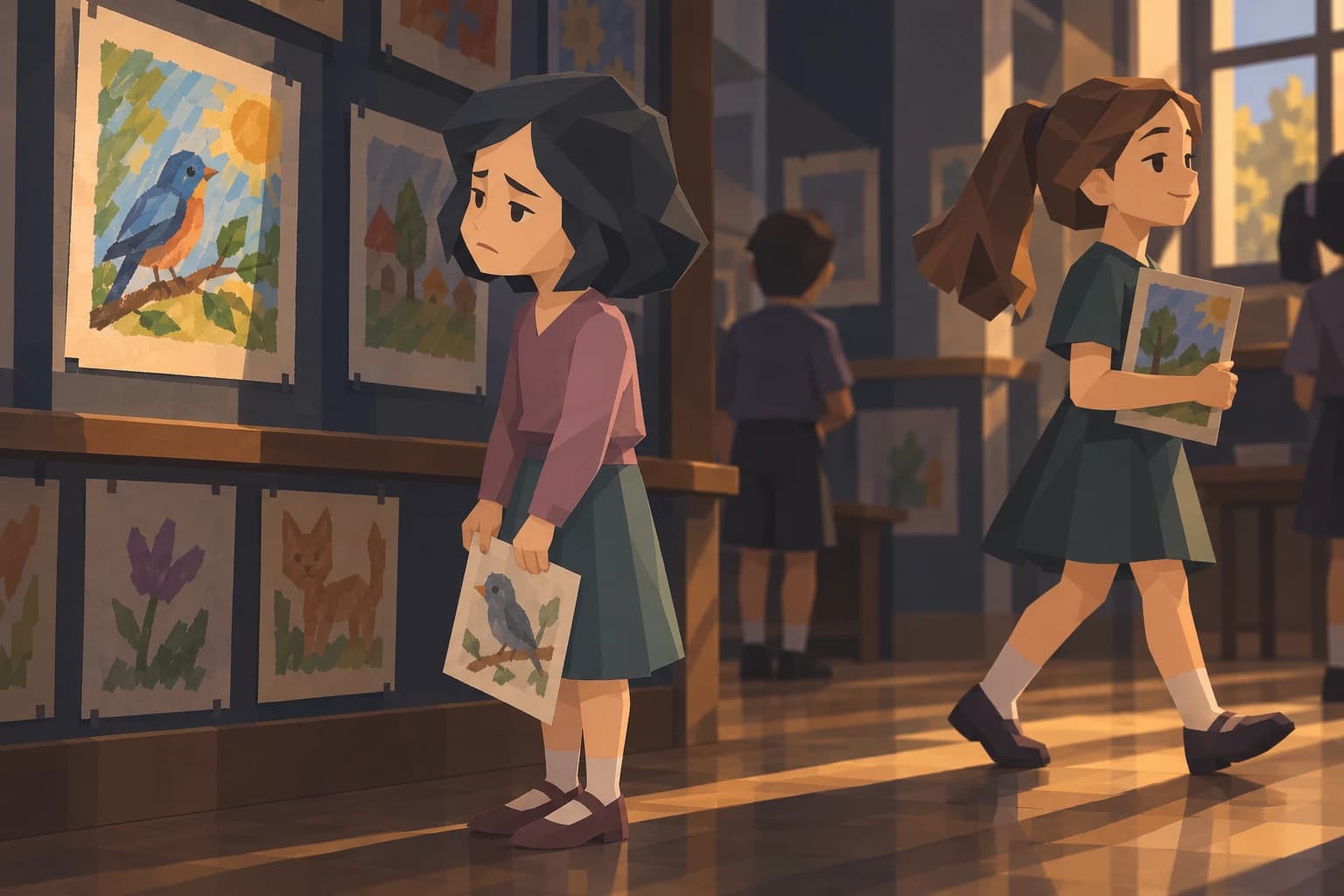
She paints a small bird with unusual colors and likes it until she sees the picture beside hers. The other child's work seems effortless, complete, and welcomed in a way hers does not. She stops looking at what she made and starts imagining what its reception says about her. The teacher's specific encouragement barely reaches her because it does not answer the larger comparison in her head. Later, a classmate asks how she mixed the wing color. For a moment she returns to the actual painting, where there is something to share instead of a ranking to survive.
Comparison makes another person's moment look like a complete life.
Waiting in the wings

She joins a school performance hoping to find people who understand the intensity she brings to music. During rehearsal, a casual joke lands badly. Rather than explain, she moves into the empty wing and closes her violin case. Part of her wants someone to follow; another part prepares to dismiss any comfort that feels too simple. Her absence leaves the others guessing. When a friend eventually sits nearby, she practices describing the particular remark that hurt. It is less satisfying than being understood without explanation, but it gives their friendship something concrete to work with.
Being known often requires giving another person information, not a test.
The work nobody can meet
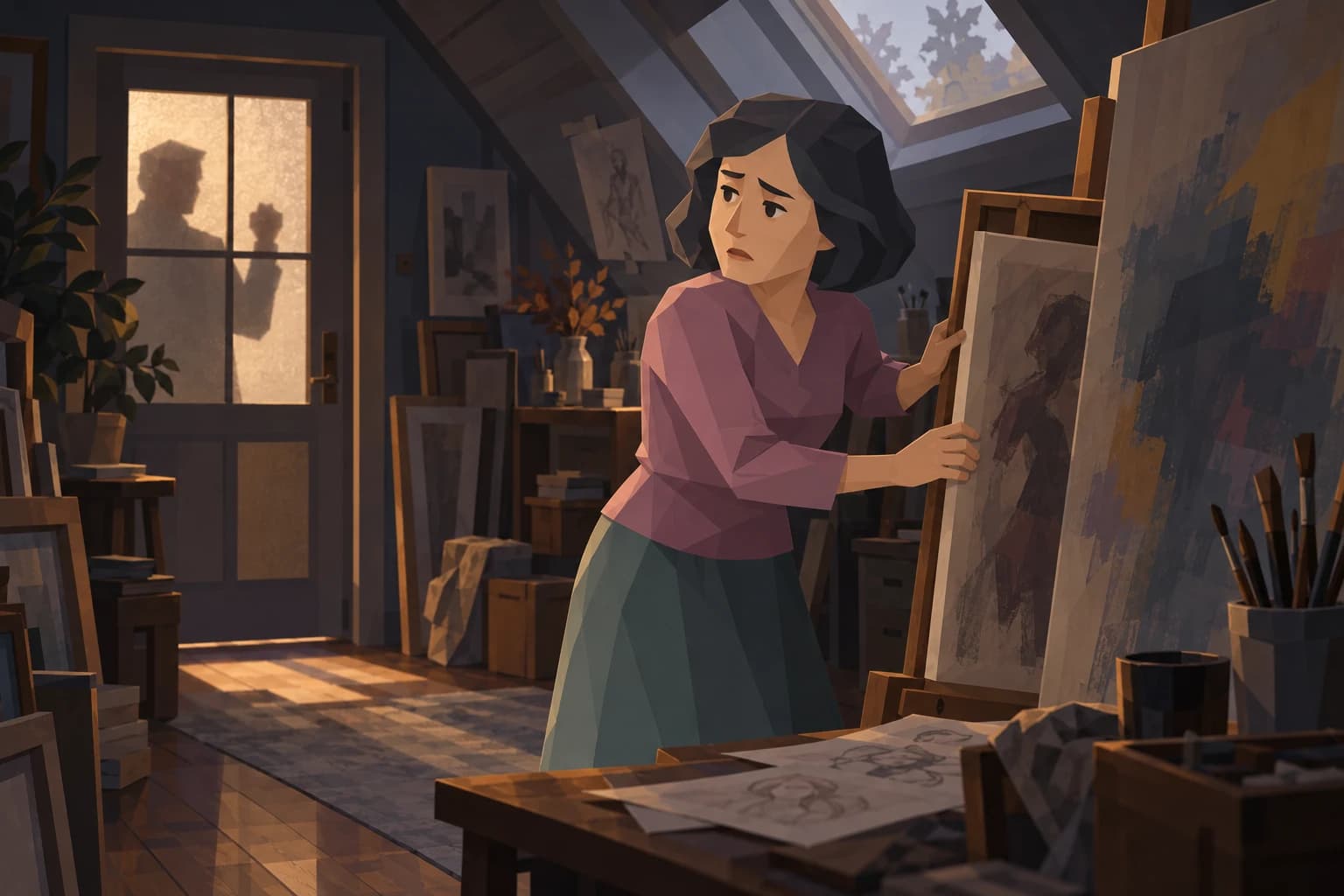
As an illustrator, she cares about making work that feels recognizably hers. That commitment produces thoughtful images, but it also gives her a reason to postpone showing them. An unfinished canvas can still become everything she hopes for; a finished one can be misunderstood. When a visitor knocks, she turns the most personal piece away. The protection has a cost: fewer conversations, missed deadlines, and no chance to learn what actually connects. She begins sharing one rough study at a time, naming what remains unresolved. Feedback becomes information about a piece of work rather than a verdict on her identity.
An imperfect offering can create a conversation that a hidden masterpiece cannot.
The distance that asks to be crossed

After a difficult week she steps onto the balcony while her sister makes tea. She wants company but says she needs to be alone, then feels wounded when her sister respects the request. The contradiction is familiar: she hopes someone will recognize the wish underneath her words and prove that she matters by crossing the distance. Eventually she returns inside and admits that she would like company without advice. Her sister can respond to that. The evening does not become profound or perfectly attuned. They drink tea, talk unevenly, and remain together through an ordinary stretch of time.
Closeness becomes more possible when her words leave a usable path toward her.
Joining before the feeling is perfect
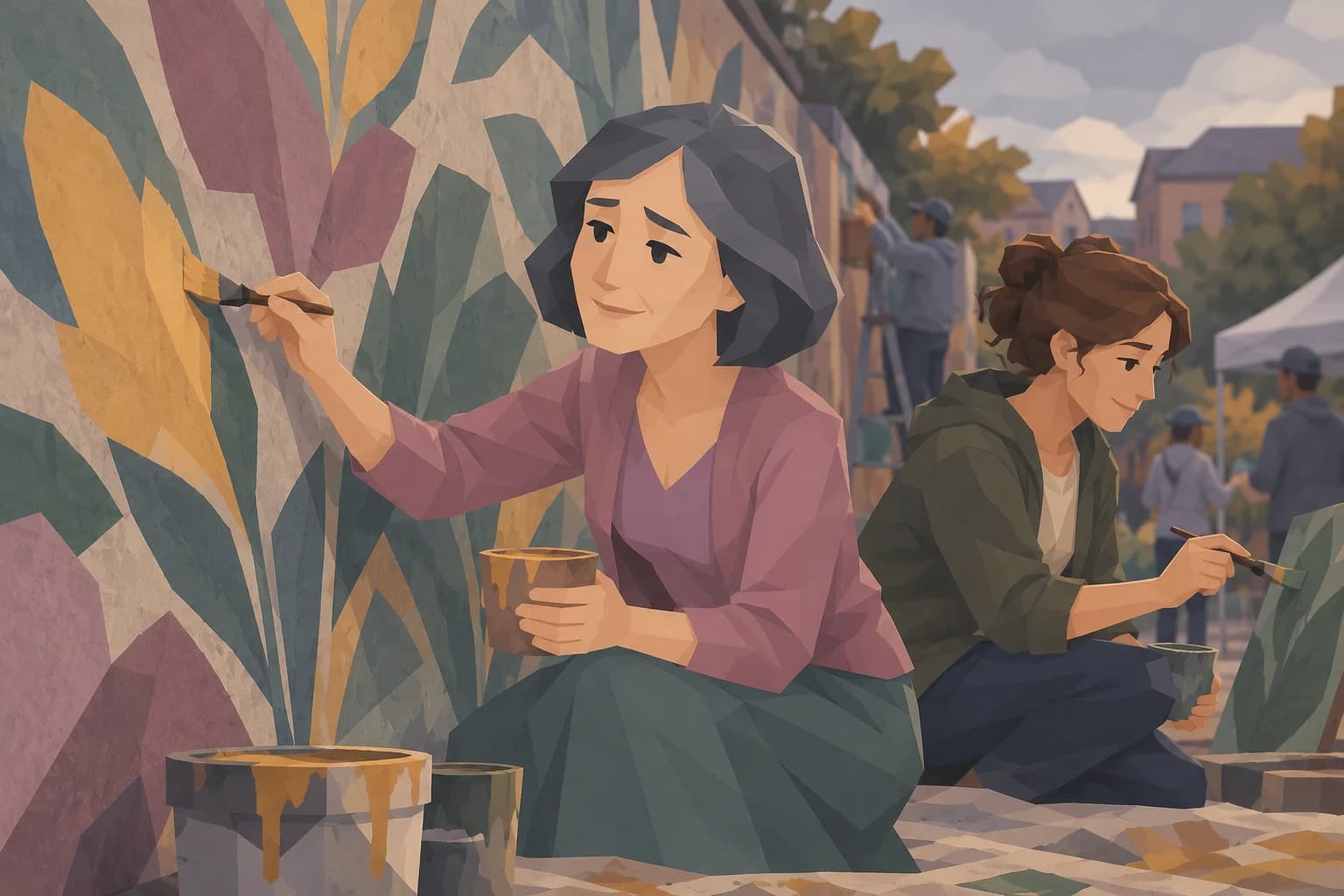
Later, she signs up for a neighborhood mural without knowing whether it will feel meaningful. Her section is small, and the final design will belong to many people. Some mornings she still compares her contribution or longs for a more singular project. She paints anyway, listens to the person beside her, and lets the afternoon be mixed. Her sensitivity remains; it now has more places to go. She can make private work as well as shared work, and feel disappointed without disappearing. Participation does not erase her individuality. It gives her particular way of seeing a place in a larger conversation.
She does not have to feel completely at home before she can begin to belong.
How the loop keeps going
- CompareShe imagines that other people possess the ease or belonging she is missing.
- WithdrawShe protects what feels personal by withholding her work, wishes, or presence.
- Read the distance as proofOthers have less to respond to, and their uncertainty seems to confirm that she cannot be understood.
The quieter signs
In this story, a real feeling becomes restrictive when she treats it as the whole account of a relationship. Curiosity gives other explanations room to exist.
What she means, and what they may hear
“Please stay with me; I am finding this hard.”
They may hear: “I want to be alone. Do not come closer.”
“This work matters to me, and I fear losing its meaning.”
They may hear: “Nothing anyone says will be good enough.”
Make room for an ordinary connection
She can keep her depth without requiring every moment to prove it.
- Describe the specific hurt She names the remark or event instead of asking another person to decode a broad withdrawal.
- Share the unfinished version One draft or honest sentence lets others meet her before everything feels fully expressed.
- Participate while feelings move She keeps a small commitment even on a day when belonging feels distant, then notices what actually happens.
Her life can be meaningful while it is still ordinary, unfinished, and shared.
Continue with the Muse’s growth practices